
Audi Brake and Drivetrain Service Guide
Audi brake and drivetrain repairs should start with the symptom, then move to system inspection and fitment confirmation. A soft pedal, ABS light, clutch slip, harsh shift, or driveline noise can point to very different parts. Genuine Audi OEM components help preserve the precise fit, hydraulic response, and drivetrain behavior expected from German engineering.
Audi vehicles are built around tight system integration. Braking, ABS, transmission control, clutch operation, quattro drivetrain behavior, and fluid specifications all work together. That precision is a benefit when everything is correct, but it also means a small mismatch can create repeat problems.
A brake warning light, vibration under braking, delayed engagement, or transmission noise should not be treated as a generic parts request. The right repair depends on the Audi model, year, trim, drivetrain, transmission type, and the exact system involved. Before ordering, confirm fitment by VIN or vehicle details, especially on models such as the Audi A4 and Audi Q5.
Why Brakes and Drivetrain Parts Need Precise Fitment
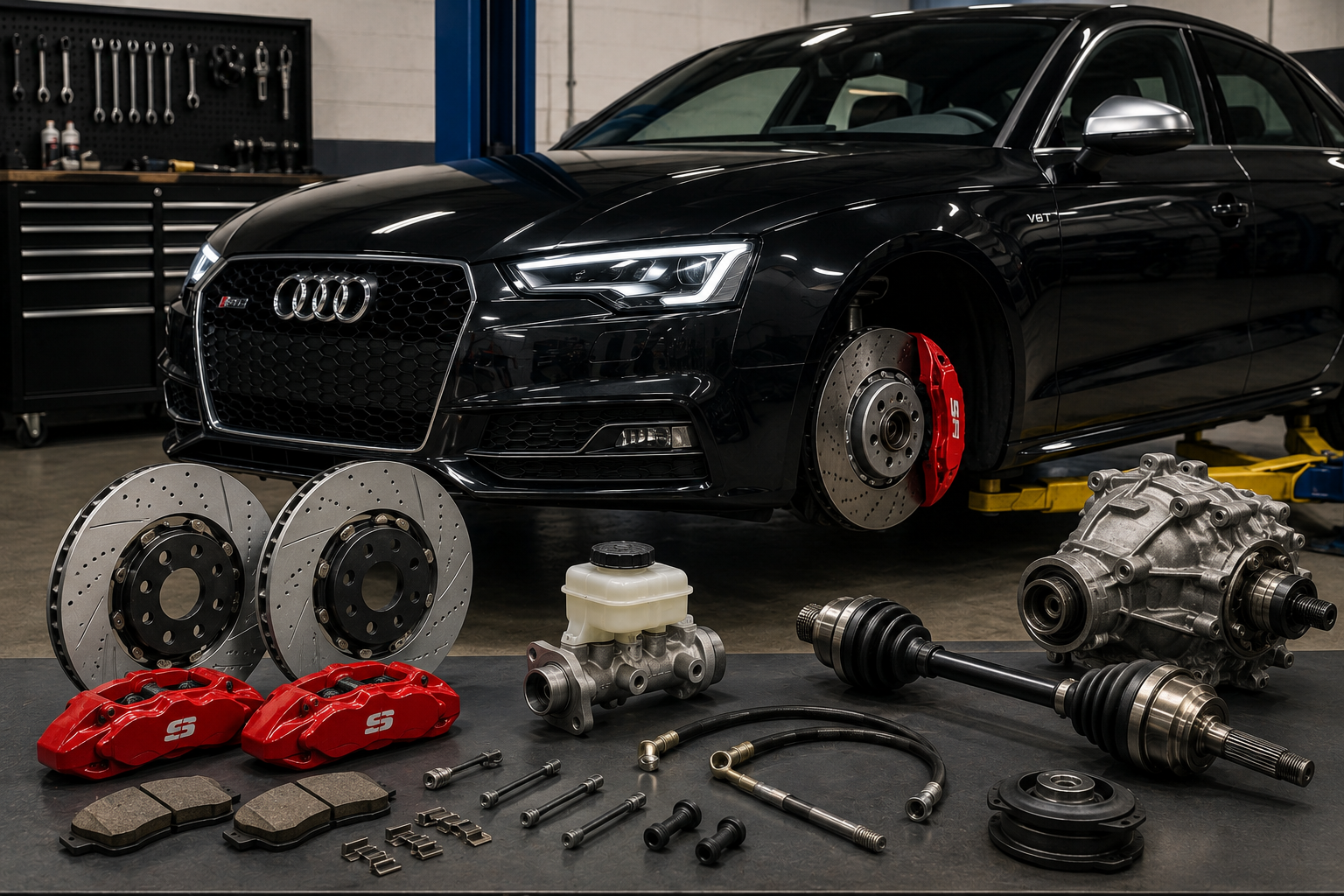
Brake parts affect pedal feel, stopping distance, stability, and driver confidence. Hydraulic parts such as lines, hoses, master-cylinder components, and calipers must hold pressure consistently. ABS parts add another layer because sensors, modules, wiring, and hydraulic controls can trigger similar warning lights.
Drivetrain parts are just as fitment-sensitive. Manual clutch parts, automatic transmission components, drive shafts, differential-related hardware, and fluid service items must match the application. The wrong part may install poorly, shift incorrectly, create vibration, or wear faster than expected. OEM Audi parts are engineered around the vehicle’s original specifications, which is why fitment accuracy matters as much as price.
Step-by-Step: How to Narrow Down the Right Audi Part
- Identify the symptom first. Note whether the issue is a soft brake pedal, ABS light, fluid leak, grinding, slipping clutch, harsh shift, delayed engagement, or driveline noise.
- Separate brake symptoms from suspension or tire symptoms. Pulling under braking can come from brake imbalance, but it can also involve tires, alignment, or worn suspension parts.
- Check fluid condition and level. Brake fluid, transmission fluid, and gear oil can reveal leaks, contamination, overheating, or overdue service.
- Confirm the system on the vehicle. Match front or rear brake placement, ABS involvement, manual or automatic transmission, quattro drivetrain details, and engine configuration.
- Use VIN or exact vehicle fitment before ordering. This helps avoid parts that look similar but are not correct for your Audi build.
- Replace related hardware when needed. Lines, seals, clips, fittings, mounts, and service hardware can prevent a clean repair when reused past their service life.
Recommended OEM Audi Parts to Review
- Brake hydraulic parts: lines, hoses, fittings, master-cylinder components, and other hydraulic hardware for leaks or soft pedal concerns.
- Brake pads and brake rotors: common service parts when stopping performance, pedal vibration, or brake noise changes.
- Brake calipers: important when a wheel drags, braking feels uneven, or a caliper is leaking or sticking.
- ABS components: sensors, wiring-related parts, modules, and hydraulic controls when the ABS light or traction-related warning appears.
- Clutch parts: pressure plate, disc, release components, and related hardware for manual Audi models with slipping, chatter, or hard shifts.
- Transmission and drivetrain service parts: fluid, seals, mounts, drive shafts, and related parts for harsh shifting, leaks, vibration, or driveline noise.
Related Parts
For model-specific shopping, start with the Audi model catalog, then narrow by your exact vehicle. Common maintenance categories for this topic include brakes, brake pads, brake rotors, brake calipers, and drive shafts. If you are planning broader maintenance at the same time, oil filters can be reviewed during routine service planning.
Key Takeaways
- Audi brake and drivetrain systems should be diagnosed by symptom, not guesswork.
- OEM precision matters because braking, ABS, transmission, and quattro-related parts are highly fitment-sensitive.
- Fluid condition can point to service needs, but fluid alone will not fix damaged mechanical parts.
- VIN-based fitment helps protect against ordering parts that look right but do not match the vehicle.
- Safety-related brake leaks, soft pedals, and warning lights should be inspected promptly.
Frequently Asked Questions
Can bad brake lines cause a soft pedal in an Audi?
Yes. A leaking or damaged brake line can reduce hydraulic pressure and create a soft, sinking, or inconsistent pedal. Any visible brake fluid leak should be handled right away.
What does an Audi ABS warning light mean?
It means the anti-lock braking system has detected a fault. The cause may involve a wheel speed sensor, wiring, hydraulic control parts, or a module, so diagnosis should come before ordering.
Should I replace Audi brake pads and rotors together?
Not always, but they should be inspected together. Rotor thickness, surface condition, vibration, and service history help determine whether pads alone are enough.
What are signs of worn Audi clutch parts?
Common signs include slipping during acceleration, a burning smell, chatter, hard shifting, or a clutch pedal feel that changes noticeably.
How do I avoid ordering the wrong drivetrain part?
Confirm the model, year, trim, engine, transmission type, and drivetrain before ordering. VIN-based lookup is the safest path for Audi fitment accuracy.
Final Thoughts
Brake and drivetrain service should protect the way an Audi was designed to feel: stable under braking, smooth through shifts, and precise under load. Start with the symptom, inspect the related system, confirm the correct fluid or hardware, and choose OEM Audi parts that match your exact vehicle. That approach supports performance, safety, and long-term reliability without turning a small maintenance issue into a larger repair.